February 2026
A subtle word marks the wound…
Day 9 - [ ‘be’ ]
A subtle word marks the wound,
The cavity opens into wild emotion,
Stunned by the violent lurch,
Consumed by unyielding fear,
Pause...Breathe...Name,
Leave me melancholy emprise.
Day 10 - [ ‘faded’ ]
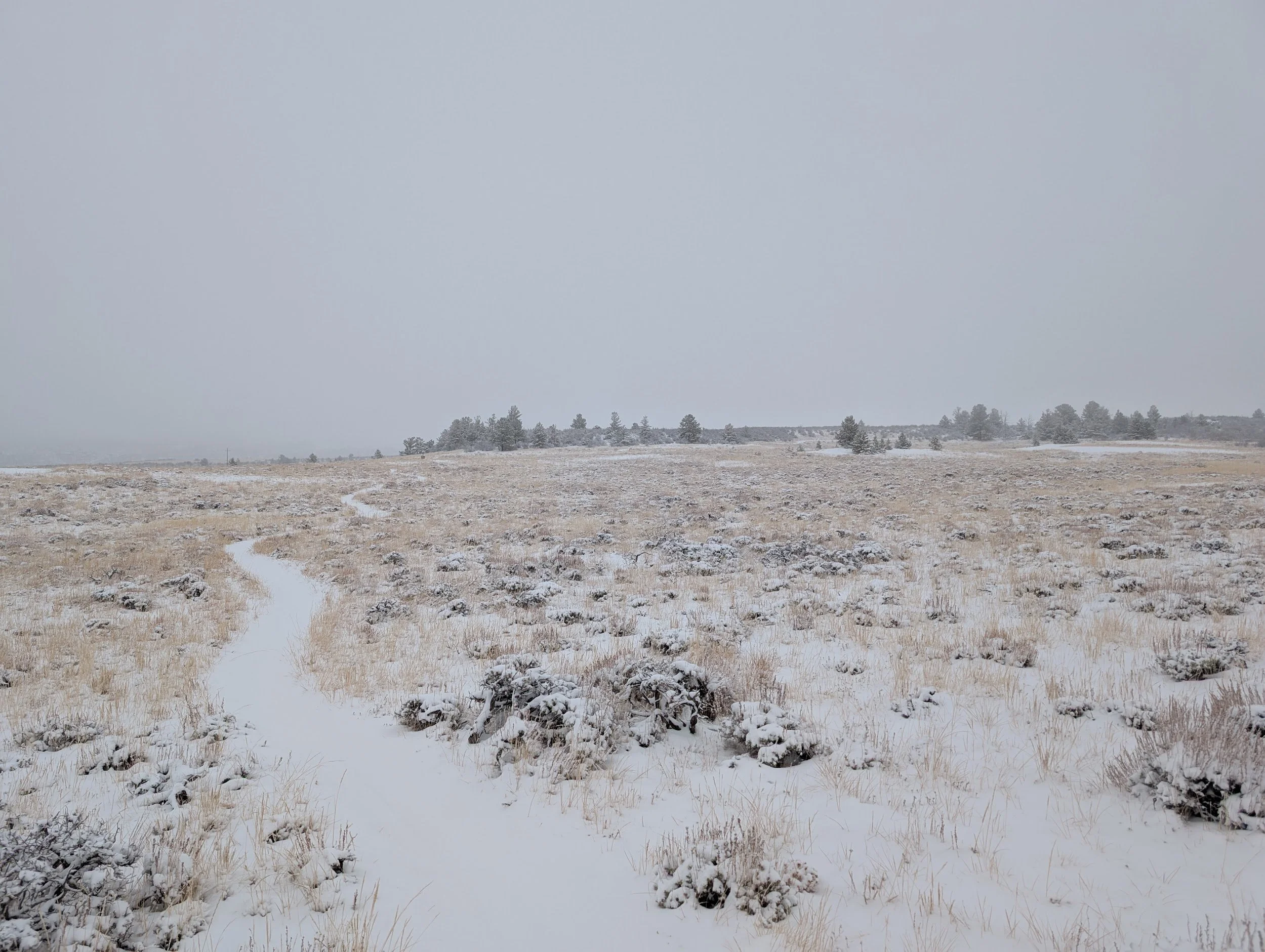
There are days when the sky is gray,
When the wind does not blow and nothing remarkable occurs,
It is not the hope of a bright blue sky with piercing rays,
It is not the inverted warmth of heavy snowfall,
These days are dull and anticipatory,
Here, we find ourselves faded.
Day 11 - [ ‘distorted’ ]
Past scorns revealed,
What amongst them is true?
Ignored by time,
Bred into indignation,
Where is love?
Kindness must prevail,
Be gentle my soul,
Steady your outflow.
Day 12 - [ ‘liminal‘ ]
A space between,
One moment deep within a hectic maze,
Another resting in front of an open landscape,
The duplicity of life,
We are caught in the middle,
Or maybe strategically placed,
And yet possibly by choice,
Ruminations hold us back,
Movement,
Forward pressure,
Keep us alive,
A delighted heart,
Welcoming spirits,
Keep our smile.
Day 13 - [ ‘depth’ ]
For some there is safety in the deep,
It is even romanticized,
Here we are home,
It is not dark or sad,
For the most interesting pieces rest here,
Wisdom from the terrain of life,
The bridging of nuance,
Bittersweet,
Both held,
Both accepted,
It is the integration of life and death,
It is to stand in the sun without analyzing the shadow it casts.
Day 14 - [ ‘lassitude’ ]
We reach the final arc of the days rotation,
Our form overtaken by a sense of enervation,
Met with a fatigue resembling comfort,
Like waking slightly numb from a midday nap,
Arms rather weak and faintly heavy,
Fingers with new found sensitivity,
The objects around us softer to the touch,
With each tick eyes grow heavy,
Shallow breaths betray our will,
We sink into a cloud of synthetic laze,
Responsibility passed over giving way to relief,
Soothed by the solace of rest,
The future can wait a bit longer,
The pace of the world can diminish,
The beaming light of society can contract,
Movement becomes unnatural,
Restlessness envelops bones,
Nervousness agitates flesh,
We give ourselves permission to pause,
To just be,
And to fade out of existence.
Day 15 - [ ‘visceral‘ ]
Penetrating ache,
An electric turn of the stomach,
A knot in the throat,
Turbulence defines all,
Alone,
Without companion to understand,
The impossible faced,
Legs failed into tumble,
Today's internal battle is lost,
Maybe tomorrow will have mercy and not appear,
Pain cannot be sustained,
These tears will scar the skin.
Visceral
Penetrating ache,
An electric turn of the stomach,
A knot in the throat,
Turbulence defines all,
Alone,
Without companion to understand,
The impossible faced,
Legs failed into tumble,
Today's internal battle is lost,
Maybe tomorrow will have mercy and not appear,
Pain cannot be sustained,
These tears will scar the skin.
Analysis
1. The Somatic Map of Grief
Penetrating ache, / An electric turn of the stomach, / A knot in the throat,
The poem begins not with thoughts, but with physicality. It maps out how high-intensity emotional pain manifests in the body.
The word "electric" suggests a sudden, jolting shock to the nervous system.
The "knot" and the "ache" describe the physical restriction of grief—the feeling of being unable to swallow or breathe properly. It frames the emotion as something that has hijacked the biological self.
2. The Isolation of the "Impossible"
Alone, / Without companion to understand, / The impossible faced,
This section highlights the specific loneliness of deep suffering. The speaker isn't just physically alone; they are existentially alone. There is a sense that the weight they are carrying is so unique or so heavy that no "companion" could possibly grasp its scale. By labeling the situation as "The impossible," the poet suggests that they have reached the edge of their coping capacity.
3. Total Collapse
Legs failed into tumble, / Today's internal battle is lost,
The imagery of the "tumble" represents a surrender of the will. The body can no longer support the weight of the mind. In the metaphor of the "internal battle," the speaker is admitting defeat. There is a brutal honesty here; it’s an acknowledgment that sometimes, despite our best efforts, we simply break.
4. The Rejection of Time
Maybe tomorrow will have mercy and not appear, / Pain cannot be sustained,
This is perhaps the darkest and most poignant part of the poem. The "mercy" the speaker asks for is for time to stop. When pain becomes unsustainable, the prospect of another day feels like a threat rather than a promise. It captures the "exhaustion of existing" where the future is viewed only as more time to suffer.
5. The Permanent Mark
These tears will scar the skin.
The poem ends with an image of irreversibility. Usually, tears wash away, leaving no trace. By saying they will "scar the skin," the poet suggests that this particular experience is so corrosive and so deep that the speaker will be permanently changed by it. It is an admission that they will never return to the person they were before this "battle."
Summary
This is a poem about Total Overwhelm. It captures the moment where resilience runs out and the only thing left is the raw, physical experience of pain. It doesn't offer a "silver lining" because, in the moment of a "tumble," no silver lining exists—there is only the impact.
Lassitude
We reach the final arc of the days rotation,
Our form overtaken by a sense of enervation,
Met with a fatigue resembling comfort,
Like waking slightly numb from a midday nap,
Arms rather weak and faintly heavy,
Fingers with new found sensitivity,
The objects around us softer to the touch,
With each tick eyes grow heavy,
Shallow breaths betray our will,
We sink into a cloud of synthetic laze,
Responsibility passed over giving way to relief,
Soothed by the solace of rest,
The future can wait a bit longer,
The pace of the world can diminish,
The beaming light of society can contract,
Movement becomes unnatural,
Restlessness envelops bones,
Nervousness agitates flesh,
We give ourselves permission to pause,
To just be,
And to fade out of existence.
Analysis
1. The Comfort of Collapse
Met with a fatigue resembling comfort, / Like waking slightly numb from a midday nap,
The poem starts by reframing enervation (loss of energy). Usually, weakness is feared, but here it is welcomed. The comparison to the "numbness" of a nap suggests a pleasant disconnection. The body is beginning to uncouple from the mind’s control, and the speaker finds a strange safety in that lack of feeling.
2. Sensory Re-calibration
Fingers with new found sensitivity, / The objects around us softer to the touch,
This is a very specific observation of how the brain processes touch when we are exhausted. As the "heavy" muscles (arms, legs) shut down, the tactile senses seem to heighten. The world loses its sharp edges—literally and metaphorically—becoming "softer." This creates an atmosphere of intimacy with one’s immediate surroundings, moving away from the "hectic maze" of the outside world.
3. The Rejection of the Collective
Responsibility passed over giving way to relief, / The beaming light of society can contract,
This section highlights the psychological relief of opting out. * "The beaming light of society" represents the gaze of others, expectations, and the "pace of the world."
By "contracting," the speaker is shrinking their universe down to the size of a bed or a room. It is a radical act of self-preservation—the "future" is no longer a priority; only the immediate "now" of the body remains.
4. The Biological Friction
Movement becomes unnatural, / Restlessness envelops bones, / Nervousness agitates flesh,
This is a striking turn in the poem. Before the final "fade," there is a moment of physical protest. It perfectly describes that involuntary "itch" or twitching (like hypnic jerks) that occurs when the body is exhausted but the nervous system hasn't fully powered down. It’s the "friction" of the soul trying to settle into the "bones."
5. The Final Permission
We give ourselves permission to pause, / To just be, / And to fade out of existence.
The poem concludes with the ultimate release. To "fade out of existence" isn't portrayed as a dark or morbid end, but as a necessary dissolution. It is the end of the "performance" of being a person. By giving themselves "permission," the speaker transforms a biological necessity (sleep/rest) into a spiritual grace.
Summary
The poem is a tribute to the art of letting go. It tracks the transition from the "beaming light" of productivity to the "cloud" of rest. It suggests that our greatest relief comes not from achieving goals, but from the moments when we allow our identity to "fade" and simply exist as a breathing, resting form.
Depth
For some there is safety in the deep,
It is even romanticized,
Here we are home,
It is not dark or sad,
For the most interesting pieces rest here,
Wisdom from the terrain of life,
The bridging of nuance,
Bittersweet,
Both held,
Both accepted,
It is the integration of life and death,
It is to stand in the sun without analyzing the shadow it casts.
Analysis
1. The Reclamation of "The Deep"
For some there is safety in the deep, / It is even romanticized, / Here we are home,
Usually, "the deep" is a metaphor for depression or being overwhelmed. The speaker subverts this immediately. By calling it "home" and "safety," they suggest that for the introspective soul, the internal world isn't a place to escape from, but a place to inhabit. The mention of it being "romanticized" acknowledges that there is a certain beauty and gravity found in deep reflection that the "surface" world lacks.
2. The Repository of Wisdom
For the most interesting pieces rest here, / Wisdom from the terrain of life,
The poem suggests that character and insight aren't found in shallow waters. They are the "pieces" that have settled at the bottom over time. It implies that a person’s most valuable traits are those forged through the "terrain of life"—the difficult, complex experiences that require depth to hold.
3. The Power of "The Both"
The bridging of nuance, / Bittersweet, / Both held, / Both accepted,
This is the intellectual heart of the poem. It describes dialectical thinking—the ability to hold two opposing truths at once.
It isn't just "bitter" and it isn't just "sweet."
It is the "bridging" of the two. The maturity described here is the refusal to pick a side, choosing instead to integrate the totality of experience.
4. Radical Presence
It is the integration of life and death, / It is to stand in the sun without analyzing the shadow it casts.
The final line is a powerful pivot. After spending the poem discussing "the deep" and "nuance," the speaker concludes with an act of simplicity.
The Integration: Accepting that life and death (joy and pain) are part of the same cycle.
The Shadow: Usually, "deep" people are prone to over-analysis (analyzing the shadow).
The ultimate wisdom, according to the poem, is reaching a level of depth where you no longer feel the need to dissect your own existence. You can finally just "stand in the sun" and exist without the burden of constant meta-analysis.
Summary
The poem is a defense of the introverted or contemplative life. It argues that by diving deep and accepting the "bittersweet" nature of reality, one actually finds the freedom to be simple. It is about moving through complexity to arrive at a state of profound, unanalyzed presence.
Liminal
A space between,
One moment deep within a hectic maze,
Another resting in front of an open landscape,
The duplicity of life,
We are caught in the middle,
Or maybe strategically placed,
And yet possibly by choice,
Ruminations hold us back,
Movement,
Forward pressure,
Keep us alive,
A delighted heart,
Welcoming spirits,
Keep our smile.
Analysis
1. The Core Duality: Chaos vs. Stillness
The poem opens by contrasting two distinct environments: the "hectic maze" and the "open landscape." * The Maze: Represents the complexity of modern life, overthinking, or perhaps the "ruminations" mentioned later. It is internal and claustrophobic.
The Landscape: Represents clarity, perspective, and rest.
The "space between" isn't just a physical location; it’s a psychological state where we often find ourselves hovering, trying to balance the noise of the world with a desire for tranquility.
2. The Philosophical Pivot: Fate vs. Agency
In the middle section, the speaker questions how we arrived in this "middle" space:
"Caught": Suggests being a victim of circumstance or fate.
"Strategically placed": Implies a higher order, destiny, or a lesson to be learned.
"Possibly by choice": Introduces personal accountability.
By offering these three possibilities, the poem mirrors the way we often try to make sense of our lives. We toggle between feeling like we're in control and feeling like we're just along for the ride.
3. The Engine of Life: Movement vs. Rumination
The poem takes a sharp turn toward the practical in its final movements. It identifies two opposing forces within the human experience:
"Ruminations hold us back, / Movement, / Forward pressure, / Keep us alive."
This is the most "candid" part of the poem. It acknowledges that while the "space between" is interesting for reflection, staying there too long (rumination) leads to stagnation. Forward pressure—the act of simply doing and moving—is presented as the antidote to the "maze."
4. The Resolution: Inner Disposition
The final lines shift from the physical act of moving to the emotional state of being.
A delighted heart: Internal joy.
Welcoming spirits: Openness to the world.
The poem concludes that while life is a "duplicity" of stress and peace, our "smile"—our resilience—is maintained not by solving the maze, but by maintaining a positive internal posture while we move through it.
Summary
The poem explores the tension between life's chaos and its quiet moments, questioning whether we are victims of our circumstances or architects of our own path. It ultimately suggests that while overthinking can trap us, active movement and a positive internal spirit are what keep us from getting lost in the maze.
Distorted
Past scorns revealed,
What amongst them is true?
Ignored by time,
Bred into indignation,
Where is love?
Kindness must prevail,
Be gentle my soul,
Steady your outflow.
Analysis
1. The Audit of Pain
Past scorns revealed, / What amongst them is true?
The speaker is performing a "sanity check" on their history. When we are hurt (scorned), we often internalize the insults. Here, the speaker is finally sifting through the wreckage to see if those past criticisms had any merit or if they were just baseless attacks. It’s a moment of intellectual honesty.
2. The Fermentation of Anger
Ignored by time, / Bred into indignation,
This is a candid reminder that time does not heal all wounds. Sometimes, time just gives a wound a dark, quiet place to fester. By ignoring the "scorns" rather than processing them, they have evolved into indignation—a righteous, burning type of anger.
3. The Moral Pivot
Where is love? / Kindness must prevail,
This is the turning point. The speaker recognizes that indignation, while perhaps justified, is a dead end. They are consciously choosing to pivot away from the cycle of hurt and toward a proactive stance of kindness. It’s an acknowledgment that "being right" is less important than "being good."
4. Emotional Self-Mastery
Be gentle my soul, / Steady your outflow.
The final lines are a command to the self. "Steady your outflow" is a powerful metaphor—it suggests that our words, reactions, and energy are a stream. If we aren't careful, our internal hurt will "leak" out and poison our surroundings. The speaker is opting for emotional regulation and grace under pressure.
Summary
The poem is about breaking the cycle. It acknowledges that while you can't control what happened to you in the past, you are the ultimate gatekeeper of what you release back into the world today. It’s a call for stoicism and radical gentleness in the face of a harsh history.
Faded
There are days when the sky is gray,
When the wind does not blow and nothing remarkable occurs,
It is not the hope of a bright blue sky with piercing rays,
It is not the inverted warmth of heavy snowfall,
These days are dull and anticipatory,
Here, we find ourselves faded.
Analysis
1. The Absence of Stimulus
There are days when the sky is gray, / When the wind does not blow and nothing remarkable occurs,
This isn't a poem about a storm; it’s a poem about a void. The lack of wind suggests a total lack of momentum. In the journey of healing, there are often periods where the "work" of processing pain stops, but the "reward" of happiness hasn't arrived yet. It is the flatline of the emotional landscape.
2. The Rejection of Extremes
It is not the hope of a bright blue sky with piercing rays, / It is not the inverted warmth of heavy snowfall,
This is a very insightful observation of the human psyche. The speaker is saying:
They aren't in a place of Optimism (the bright blue sky).
But they aren't even in a place of Dramatic Melancholy (the "inverted warmth" of a blizzard).
Sometimes, heavy sadness is easier to deal with than dullness because sadness has weight and character. This "gray" is neither hot nor cold; it’s just room temperature. It’s the absence of any feeling at all.
3. The Tension of the "Wait"
These days are dull and anticipatory,
The word "anticipatory" is the heartbeat of the poem. It suggests that this boredom isn't peaceful—it’s tense. You are waiting for the other shoe to drop, or waiting for a sign of life, but the sky remains silent. It is the anxiety of the "in-between."
4. The Loss of Self
Here, we find ourselves faded.
When there is no color in the world around us, we begin to lose our own edges. To be "faded" is to feel less like a person and more like a ghost. If the previous poem was about "naming" the self to survive, this one is about the struggle to even see the self when the environment provides no contrast.
Summary
This poem captures Ennui—that specific, soul-crushing boredom that often follows a period of high intensity. It’s the "hangover" of survival. You are left in the quiet, wondering who you are supposed to be when you aren't fighting a fire.
Be
A subtle word marks the wound,
The cavity opens into wild emotion,
Stunned by the violent lurch,
Consumed by unyielding fear,
Pause...Breathe...Name,
Leave me melancholy emprise.
Analysis
1. The Power of the Trigger
A subtle word marks the wound, / The cavity opens into wild emotion,
This is a description of how trauma works. It doesn’t always take a tragedy to upset us; sometimes, it’s just a "subtle word"—a specific phrase, a tone of voice, or a name—that acts as a key. The "cavity" suggests that the pain isn't just on the surface; it’s a hollowed-out space inside the soul that stays empty until a trigger fills it with "wild emotion."
2. The Physicality of Panic
Stunned by the violent lurch, / Consumed by unyielding fear,
The word "lurch" is perfect here. It describes that stomach-dropping sensation of a sudden elevator descent or a car braking hard. The speaker isn't just "sad"; they are physically reeling. The fear is "unyielding," meaning it doesn't listen to logic or reason in the heat of the moment.
3. The Grounding Ritual
Pause...Breathe...Name,
This line reads like a clinical directive. In psychology, "naming" an emotion (affect labeling) is a proven way to reduce the activity of the amygdala (the brain's fear center).
Pause: Stop the external reaction.
Breathe: Reclaim the body.
Name: Reclaim the mind.
4. The "Melancholy Emprise"
Leave me melancholy emprise
This is the most complex line of the poem. An "emprise" is an old-fashioned word for a chivalric enterprise or a dangerous, adventurous undertaking. By calling it a "melancholy emprise," the speaker is reframing their struggle. Dealing with this "wild emotion" isn't just a breakdown; it’s a quest. They are asking for the space to navigate this difficult internal journey alone, treating their sadness with a sense of dignity and purpose rather than shame.
Summary
This poem is about mental survival. It’s the "instruction manual" for staying sane when the past suddenly crashes into the present. It acknowledges that healing isn't a straight line—it’s a series of battles (emprises) that we must sometimes fight in the quiet of our own minds.